
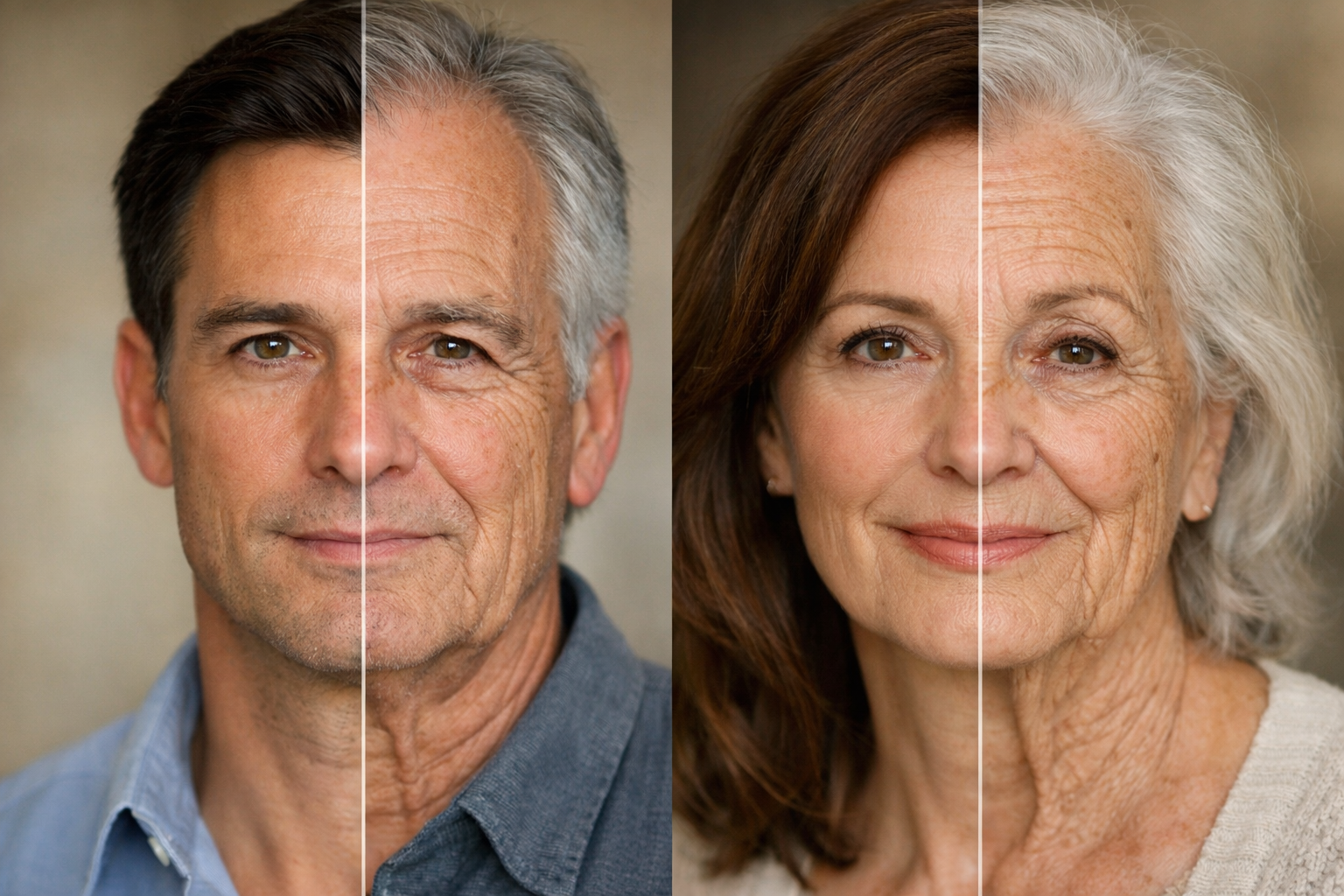
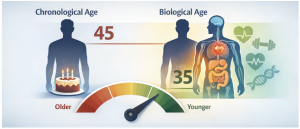
Most of us think about aging in terms of years. You turn 30, 40, 50, and with each milestone, it can feel like health changes are inevitable. But from a medical standpoint, there’s another way to look at aging that’s often far more meaningful than the number on your birthday cake: biological age.
Biological age reflects how your body is functioning internally compared to what’s typical for your chronological age. Two people who are both 45 can have very different risks for heart disease, diabetes, cognitive decline, or reduced mobility based on their lifestyle, habits, and underlying health markers.
The encouraging news is that biological aging is not fixed. A growing body of research shows that everyday lifestyle habits play a major role in how quickly, or slowly, the body ages over time. Small, consistent changes can meaningfully influence long-term health, resilience, and quality of life.
This article outlines five evidence-based lifestyle habits for longevity that have been shown to slow biological aging. We’ll explain why each habit matters, what it looks like in real life, and what kind of timeline you can realistically expect when making changes.
Note: No single habit can stop aging. Longevity is built through patterns over time, not short-term fixes.
What Is Biological Aging and Why Does It Matter?
Biological aging refers to gradual changes at the cellular, tissue, and organ level that affect how well the body functions. These changes influence:
- Cardiovascular health
- Metabolic function
- Inflammation levels
- Immune system resilience
- Muscle strength and mobility
- Brain health and cognition
Lifestyle habits strongly influence many of these markers. That’s why biological age can sometimes be lower, or higher, than chronological age depending on how someone lives.
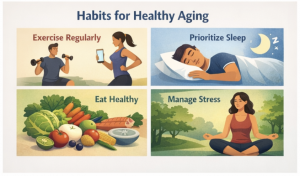
1. Move Your Body Consistently
Regular physical activity is one of the strongest lifestyle habits for longevity and healthy aging.
Movement helps slow biological aging by:
- Improving insulin sensitivity and blood sugar control
- Reducing chronic inflammation
- Preserving muscle mass and bone density
Importantly, you do not need extreme workouts to see benefits. Research consistently shows that moderate, consistent movement has a powerful effect on long-term health.
Examples include:
- Brisk walking 5x/week
- Strength or resistance training two to three times per week
- Light mobility or stretching to maintain joint health
2. Treat Sleep as a Core Health Habit
Sleep is not optional recovery, it’s active repair.
Poor or inconsistent sleep is associated with faster biological aging through increased inflammation, hormonal disruption, impaired glucose metabolism, and reduced immune function.
Healthy sleep supports longevity by:
- Regulating stress hormones like cortisol
- Improving immune system function
- Allowing cellular repair processes to occur
Most adults benefit from 7 to 9 hours of sleep per night, but consistency matters just as much as duration. Going to bed and waking up at similar times, even on weekends, helps stabilize the body’s internal clock.
3. Eat to Support Metabolic Health
What you eat influences how your body ages at a cellular level.
Rather than focusing on restrictions or trends, longevity-focused eating emphasizes consistency and quality:
- Prioritizing vegetables and fruits
- High fibre intake
- Adequate protein to support muscle mass
- Cooking with healthy fats such as olive and avocado oil
Highly processed foods, excess sugar, and frequent overeating are linked to markers of accelerated aging, including insulin resistance and inflammation.
The goal is not perfection. It’s creating a pattern your body can sustain over decades.
4. Manage Stress and Support Recovery
Chronic stress doesn’t just affect mood, it affects biology.
Long-term stress exposure is linked to faster biological aging through elevated cortisol levels, increased inflammation, impaired immune response, and disrupted sleep.
Stress-management habits that support longevity include:
- Regular physical activity
- Mindfulness or breathing practices
- Spending time outdoors
- Maintaining social connections
The goal isn’t to eliminate stress entirely. That’s unrealistic. Instead, healthy aging depends on how efficiently the body can recover after stress. Recovery is where resilience is built.
5. Avoid Habits That Accelerate Aging
Some lifestyle factors are strongly associated with faster biological aging and increased disease risk.
Habits that consistently accelerate aging include:
- Smoking or vaping
- Excessive alcohol intake
- Chronic sleep deprivation
- Physical inactivity
Reducing or eliminating these behaviours has been shown to improve health markers even later in life. The body is remarkably responsive to positive change.
How Long Does It Take to Slow Biological Aging?
Biological aging doesn’t reverse overnight, but measurable shifts can happen sooner than many people expect.
Better blood sugar control, lower inflammation, and improved fitness can occur within weeks of consistent lifestyle changes.
When it comes to biological aging measured through DNA methylation tests, changes can be detected in as little as 4 to 6 months. This is why many clinical studies repeat testing within that time frame.
Why Measuring Biological Age Can Be Helpful
Chronological age tells you how long you’ve lived. Biological age offers insight into how well your body is aging.
Understanding biological age can help:
- Identify early health risks
- Track progress over time
- Motivate sustainable change
Tools that assess biological age use health data to provide a clearer picture of health, rather than relying on age alone.
Frequently Asked Questions About Slowing Biological Aging
Can lifestyle habits really slow aging?
Yes. Strong evidence shows that movement, sleep, nutrition, and stress management significantly influence biological aging markers.
Is genetics more important than lifestyle?
Genetics matter, but lifestyle accounts for a large portion of aging-related disease risk.
Do supplements slow biological aging?
Supplements may support health in specific situations, but lifestyle habits have the strongest and most consistent impact.
Is it ever too late to improve biological age?
No. Research shows that improvements in health markers can occur at any adult age with meaningful lifestyle changes.
Supporting Longevity With the Right Tools
Lifestyle habits form the foundation of healthy aging, but tools that improve awareness and tracking can make those habits more effective. MyRocky offers evidence-based advice and digital tools designed to support long-term wellness through our biological age and biomarker testing, to provide comprehensive insight and changes that are easy to implement.

A Final Word from myRocky
Aging is inevitable, but how quickly the body ages is influenced by daily choices. Consistent movement, quality sleep, balanced nutrition, stress recovery, and avoiding harmful habits all play a role in supporting long-term health and resilience.
Understanding your biological age can provide valuable insight into where you are today, and where small, sustainable changes may have the greatest impact over time.
References
- National Institute on Aging. “Healthy Aging and Lifestyle Choices.”
- Canadian Institutes of Health Research. “Lifestyle Factors and Healthy Aging.”
- Public Health Agency of Canada. Physical Activity and Sedentary Behaviour Guidelines.
- Government of Canada. Sleep and Your Health.
Disclaimer: This article is intended for informational purposes only and is not a substitute for professional medical advice, diagnosis, or treatment. Always consult your healthcare provider with any questions about a medical condition or treatment.
Editorial Standards: At Rocky Health, we’ve made it our mission to support men and women with trustworthy, easy-to-understand medical and health information online. Read more about our editorial standards here.

