

Noticing more hair in the shower drain or feeling like your hairline looks a little different can be unsettling. For many Canadians, the first thought is: Am I actually going bald—or am I just overthinking it?
Hair loss often starts subtly. It doesn’t usually happen overnight, and early signs are easy to miss or dismiss as stress, aging, or normal shedding. At the same time, catching hair loss early can make a meaningful difference in how well prevention or treatment works.
This guide breaks down the most common early signs of hair loss in both men and women, how to tell the difference between normal shedding and balding, what causes hair loss, and what you can do if you’re starting to notice changes.
Note: Some hair shedding is completely normal. Balding is about patterns and progression over time, not a single bad hair day.
Start a confidential hair loss assessment online
First, What’s Normal Hair Shedding—and What’s Not?
Before jumping to conclusions, it helps to know what’s normal.
Most people lose between 50 and 100 hairs per day as part of the natural hair growth cycle. These hairs are typically replaced by new growth. Normal shedding usually looks like:
- Hair falling out evenly from all over the scalp.
- No visible thinning or bald spots.
- Hair that grows back over time.
Hair loss or balding, on the other hand, involves reduced regrowth or progressive thinning in specific areas. That’s when it’s worth paying closer attention.
7 Signs You Are Balding
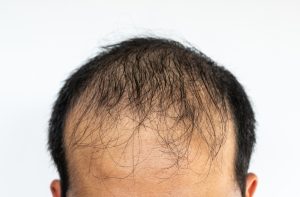
Sign 1: Your Hairline Is Slowly Receding
One of the earliest signs of balding in men is a receding hairline. This often starts at the temples, forming an “M” shape over time.
- Your forehead looks larger in photographs.
- The corners of your hairline are creeping back.
- Hairstyles that used to work no longer sit the same.
Receding hairlines are most commonly linked to androgenetic alopecia (male pattern baldness), which is influenced by genetics and hormones.
In women, hairline recession is less common, but some may notice subtle thinning around the temples or along the front hairline.
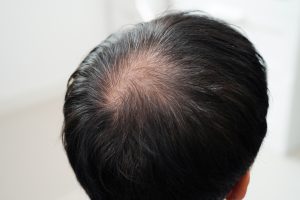
Sign 2: Thinning at the Crown or Part Line
Another classic early sign of hair loss is thinning at the crown (top of the head).
In men, this often appears as a small thinning spot that gradually expands. In women, thinning usually shows up as a widening part rather than a distinct bald patch.
- The scalp becomes more visible under bright light.
- A part that looks wider than it used to.
- Hair that feels less dense when tied back or styled.
Sign 3: Your Hair Feels Finer or Weaker Overall
Hair loss doesn’t always mean losing large amounts of hair at once. Sometimes, hair strands gradually become thinner and weaker.
- Hair feels softer or more fragile.
- Ponytails or buns look smaller.
- Hair doesn’t hold volume like it used to.
This process, called miniaturization, is a hallmark of pattern baldness.
Sign 4: Excessive Shedding That Doesn’t Improve
Increased shedding can happen during stressful periods, illness, or major life changes—but it usually resolves within a few months.
- Shedding continues for several months.
- Hair fall feels heavier than usual every day.
- You notice thinning alongside shedding.
Sign 5: Hair Loss Runs in Your Family
Genetics play a major role in pattern baldness. Knowing your family history can help you stay alert to early signs and act sooner.
Sign 6: Styling Becomes More Difficult
- Hairstyles don’t sit the same anymore.
- More of your scalp shows when hair is wet or styled.
- You rely on certain styles to hide thinning areas.
Sign 7: Hair Loss That Doesn’t Grow Back
- Shed hair isn’t being replaced.
- Thin areas slowly expand.
- Hair density continues to decrease.
Worried About Hair Loss? Get Clarity Early.
If something feels different, getting clear information and professional guidance early can help you take control and make informed decisions about your hair health.
Talk to a healthcare provider about hair loss
References
- How Much Hair Loss Is Normal and When To Worry, Cleveland Clinic.
- Alopecia, Canadian Dermatology Association.
- Hereditary-Patterned Baldness A to Z, Harvard Health Publishing.
Disclaimer: This article is intended for informational purposes only and is not a substitute for professional medical advice, diagnosis, or treatment. Always consult your healthcare provider with any questions about a medical condition or treatment.
Editorial Standards: At Rocky Health, we’ve made it our mission to support men and women with trustworthy, easy-to-understand medical and health information online. Read more about our editorial standards here.

