
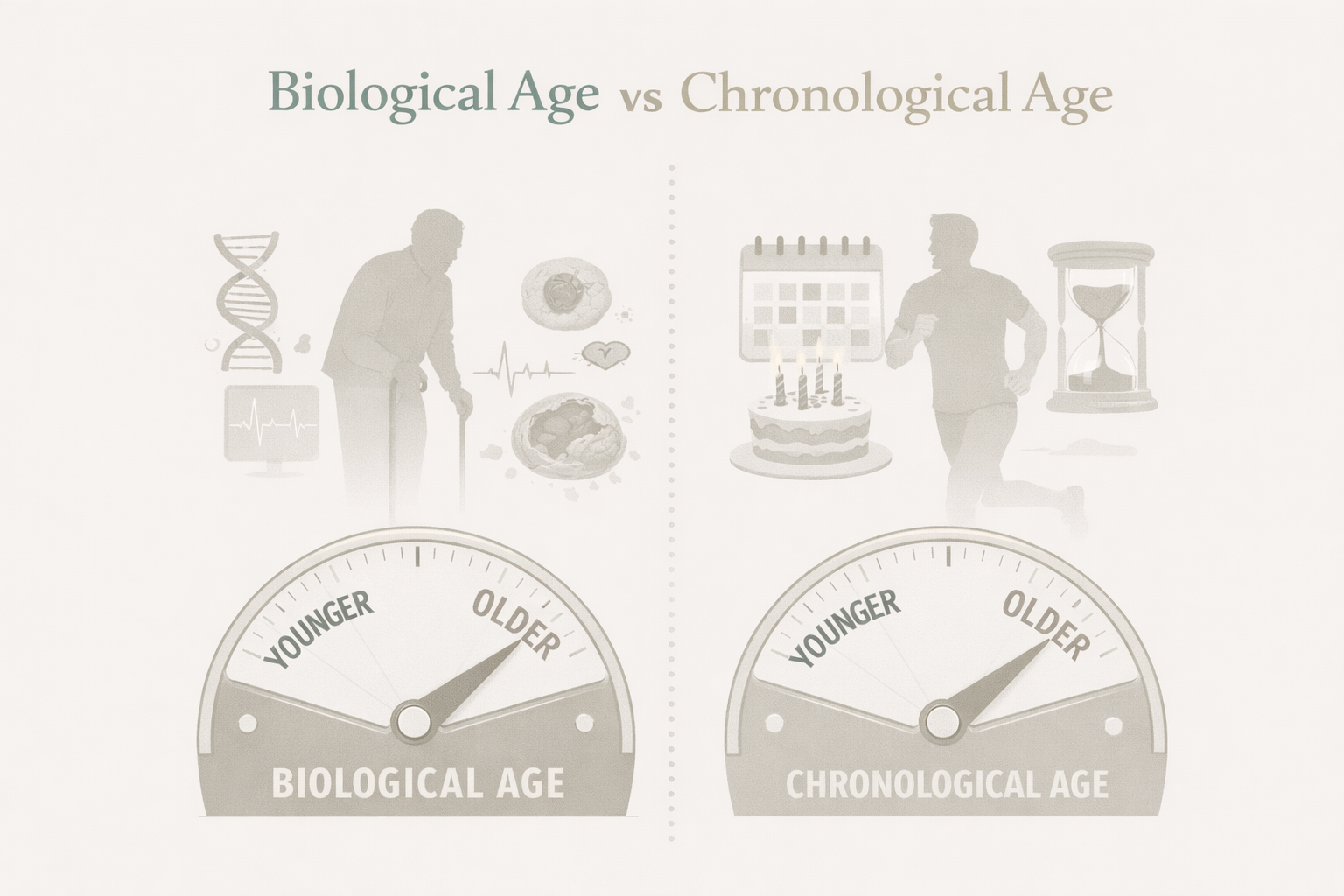
Most of us know our age without thinking twice. It’s the number tied to our birthday and the one that shows up on forms, health records, and insurance documents. This number is known as your chronological age.
But from a medical and longevity perspective, there’s another concept that often matters more for long-term health: biological age.
Two people can be the same chronological age yet have very different risks for heart disease, diabetes, cognitive decline, or mobility issues. One reason for this difference is biological aging — how resilient and well-regulated the body’s systems are beneath the surface.
This article explains what biological age means, how it differs from chronological age, what influences biological aging, how it’s measured, and whether it can be improved over time.

What Is Chronological Age?
Chronological age is the simplest way to measure aging. It’s the amount of time that has passed since you were born, expressed in years. However, it does not account for individual differences in health, genetics, lifestyle, or disease risk. Two people who are both 50 years old may have bodies that function very differently.
What Is Biological Age?
Biological age refers to how old your body appears to be based on its physiological condition and function.
Rather than counting years, biological age reflects how well key systems in the body are working, including:
- Cardiovascular system
- Hormones
- Immune function
- Inflammatory balance
- Kidney and liver function
- Muscle strength and body composition
Biological age is measured using DNA methylation tests (epigenetic clocks).
If your biological age is lower than your chronological age, it suggests your body is functioning in a more optimized and efficient way than typically seen at your age. If it’s higher, it may indicate that certain systems are under greater strain and that risk for age-related conditions is elevated.
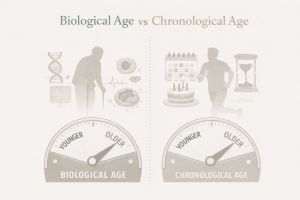
Biological Age vs Chronological Age: The Key Differences
Chronological Age — the number of years you’ve been alive. Fixed, objective, and unchangeable.
Biological Age — how old your body actually is at a cellular level. Influenced by:
- Diet & exercise
- Sleep & stress levels
- Genetics & lifestyle habits (smoking, alcohol, etc.)
Why it matters:
- Biological age is a better predictor of disease risk and longevity than your birth year
- Two people can be the same chronological age but have very different biological ages
The best part? Unlike chronological age, biological age can be reversed through healthy habits.
What Factors Influence Biological Aging?
Biological aging is shaped by a combination of genetics, environment, and lifestyle. While genetics play a role, research shows that lifestyle factors have a significant impact on how quickly or slowly biological aging occurs.
Key influences include:
Physical activity
Regular movement improves cardiovascular health, insulin sensitivity, muscle mass, and inflammation levels, all of which are linked to healthier biological aging.
Nutrition
Diet affects blood sugar control, cholesterol, inflammation, and metabolic health. Long-term dietary patterns matter more than short-term changes.
Sleep quality and consistency
Chronic sleep deprivation is associated with faster biological aging through hormonal disruption and increased inflammation.
Stress and recovery
Long-term stress exposure affects cortisol levels, immune function, and cellular aging. The ability to recover from stress is critical.
Smoking and alcohol use
Smoking and excessive alcohol intake are strongly associated with accelerated biological aging and earlier disease risk.
Chronic health conditions
Conditions such as diabetes, hypertension, and obesity can raise biological age if not well managed.
Which Biomarkers Influence Ageing?
Several key biomarkers have a direct impact on how quickly — or slowly — your body ages. Keeping these markers in a healthy range can help slow the aging process from the inside out.
Biomarkers that influence how you age:
- Blood sugar & insulin levels — chronic high blood sugar accelerates cellular aging and increases disease risk
- Cholesterol & lipid levels — imbalanced lipids contribute to cardiovascular aging and arterial damage
- Blood pressure — sustained high blood pressure strains the heart and blood vessels over time
- Inflammatory markers — chronic inflammation is one of the biggest drivers of accelerated aging
- Kidney & liver function — these organs filter toxins; declining function speeds up internal aging
- Body composition — excess body fat, especially visceral fat, is linked to faster biological aging
- Cardiovascular fitness — low fitness levels are strongly associated with poorer aging outcomes
How Is Biological Age Measured?
One of the most accurate ways to measure biological age is through DNA methylation testing — also known as an epigenetic clock test.
What is DNA methylation? DNA methylation is a natural chemical process where small molecules attach to your DNA and influence how your genes are expressed. As we age, these methylation patterns change in predictable ways. Scientists have mapped these changes so precisely that they can use them to estimate how old your body truly is at a cellular level.
How does the test work?
- A sample is taken — usually saliva or blood
- The methylation patterns across thousands of points in your DNA are analysed
- The results are compared against a reference dataset to calculate your biological age
- Your biological age is then compared to your chronological age to show whether your body is aging faster or slower than expected
Is this the gold standard? Unlike standard blood tests, DNA methylation reflects aging at the deepest level — inside your cells. It captures changes that other biomarkers may miss, making it one of the most reliable tools available for measuring biological age today.
Can You Lower Your Biological Age?
While you cannot change your chronological age, biological age is modifiable.
Research shows that improvements in lifestyle habits can positively influence many of the biomarkers used to estimate biological age.
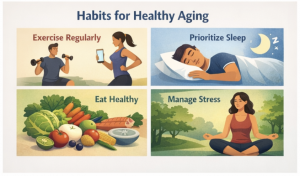
Strategies that may help reduce biological age over time include:
- Regular physical activity
- Consistent, high-quality sleep
- Eating a balanced, nutrient-dense diet
- Managing stress
- Moderating alcohol intake
Why Understanding Biological Age Can Be Helpful
- It reveals what’s really going on inside your body: Your chronological age tells you how long you’ve been alive. Your biological age tells you how well you’ve been living. It can uncover signs of accelerated aging before symptoms or disease even appear.
- It helps you take action early: If your biological age is higher than your chronological age, it’s a signal, not a sentence. Understanding this gap gives you the opportunity to make targeted lifestyle changes before small issues become bigger health problems.
- It makes healthy habits measurable: One of the hardest parts of building healthy habits is not being able to see the results. Tracking biological age over time lets you see the tangible impact of improvements to your diet, sleep, exercise, and stress levels.
Frequently Asked Questions About Biological Age
Is biological age more important than chronological age?
Both matter, but biological age offers more meaningful insight into your current health and long-term risk. Unlike chronological age, it’s something you can actively influence.
Is biological age scientifically valid?
Yes. It’s one of the most actively researched areas in modern medicine, and many of the biomarkers used — such as inflammation levels and DNA methylation — are well established in clinical practice.
Can supplements lower biological age?
Some may support specific aspects of health, but they’re not a shortcut. The most consistent improvements come from foundational habits such as sleep, exercise, diet, and stress management.
Is it ever too late to improve your biological age?
Not at all. Research shows that lifestyle changes can improve biological markers at any adult age. Small, consistent changes can make a real difference over time.
How often should biological age be tested?
Every 4 to 6 months is a reasonable approach, giving enough time for lifestyle changes to show up in your results.
A Final Word from myRocky
Chronological age tells you how long you’ve lived. Biological age helps explain how well your body is aging. While time moves forward for everyone, biological aging is influenced by daily choices and long-term habits.
Understanding this difference can be a powerful motivator for change, helping you focus on actions that support not just a longer life, but a healthier one.
References
- National Institute on Aging. “What Is Healthy Aging?”
- Mayo Clinic. “Understanding the Difference Between Biological Age and Chronological Age.”
- McGill University. Epigenetics Research Overview.
- Levine, M.E. (2013). Modeling the Rate of Senescence: Can Estimated Biological Age Predict Mortality More Accurately Than Chronological Age? Aging (Albany NY).
Disclaimer: This article is intended for informational purposes only and is not a substitute for professional medical advice, diagnosis, or treatment. Always consult your healthcare provider with any questions about a medical condition or treatment.
Editorial Standards: At Rocky Health, we’ve made it our mission to support men and women with trustworthy, easy-to-understand medical and health information online. Read more about our editorial standards here.

