
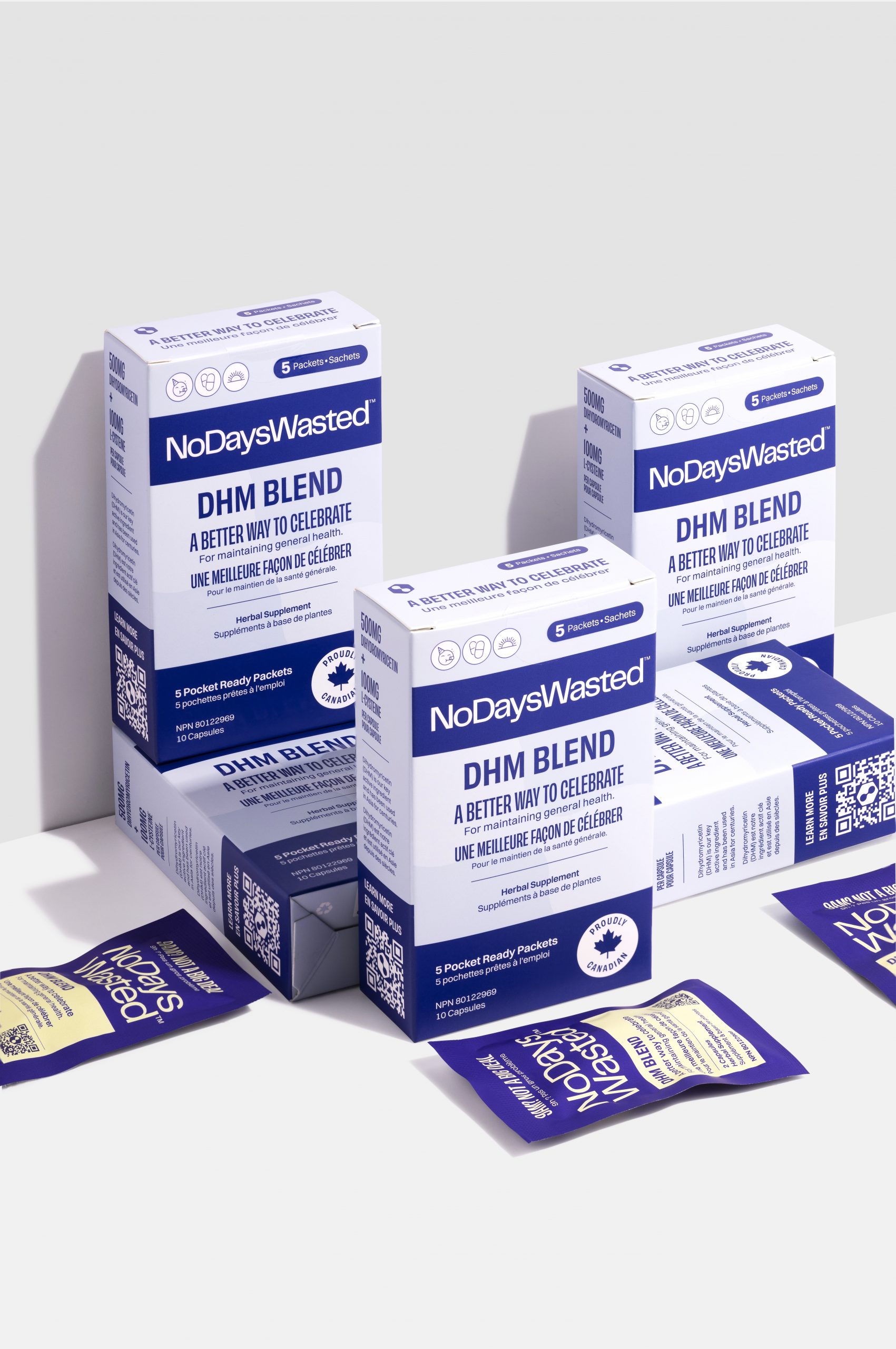
If you have ever searched for a way to take the edge off a hangover, chances are you have come across DHM. Short for dihydromyricetin, DHM is a natural flavonoid compound that has been generating a lot of attention in the supplement world, especially among people looking for something backed by at least some science rather than just marketing hype.
But does DHM actually work? Is it safe? And if so, when and how should you take it?
These are fair questions, and the answers are more nuanced than most supplement companies would have you believe. This guide takes an honest, evidence-based look at what DHM is, what the research says about its effects on hangovers, and what you should know before adding it to your routine.
Note: DHM is a dietary supplement, not a medication. It is not intended to diagnose, treat, cure, or prevent any disease. This article is for educational purposes only and should not be considered medical advice. Always consult a healthcare provider before starting any new supplement.
What Is DHM?
Dihydromyricetin, also known as ampelopsin, is a flavonoid found naturally in several plant species, most notably the Japanese raisin tree (Hovenia dulcis). This plant has a long history in traditional Chinese and Korean medicine, where it has been used for centuries as a remedy for alcohol-related ailments.
In fact, Hovenia dulcis was listed among the top anti-hangover herbal medicines in China’s first official pharmacopoeia, the Tang Materia Medica, dating back to 659 AD[1].
Like other flavonoids, DHM is a plant-based compound with antioxidant and anti-inflammatory properties. What makes it unique is its specific relationship with alcohol metabolism, which is where the modern scientific interest in DHM began.

How Hangovers Work: A Quick Overview
To understand how DHM might help with hangovers, it helps to understand what causes a hangover in the first place.
When you drink alcohol, your liver breaks it down in two stages. First, an enzyme called alcohol dehydrogenase (ADH) converts ethanol into acetaldehyde, a toxic compound that is roughly 20 times more harmful than alcohol itself. Then, a second enzyme called acetaldehyde dehydrogenase (ALDH) breaks acetaldehyde down into acetate, which is harmless and easily eliminated by the body.
Hangover symptoms, including headache, nausea, fatigue, brain fog, and general malaise, are largely caused by the buildup of acetaldehyde in your system, along with dehydration, inflammation, and disruption to your sleep cycle. The faster your body can clear acetaldehyde, the less severe your hangover tends to be.
Does DHM Actually Help With Hangovers? What the Research Says
The short answer is that the research is promising but not yet conclusive. Here is what the key studies have found:
The Landmark 2012 Study
The study that put DHM on the map was published in the Journal of Neuroscience by researchers affiliated with UCLA. The team found that DHM was highly effective at counteracting acute alcohol intoxication in animal models. Rats given the equivalent of roughly 15 to 20 drinks regained their coordination within about 5 minutes when treated with DHM, compared to 70 minutes without it[1].
The researchers also found that DHM reduced alcohol withdrawal symptoms, including increased anxiety and seizure susceptibility, and that it significantly decreased voluntary alcohol consumption in rats given the choice to drink. These effects were linked to DHM’s ability to modulate GABA receptors in the brain, which are the same receptors that alcohol acts on to produce its sedative and intoxicating effects.
The USC School of Pharmacy Study
A later study by researchers at the USC School of Pharmacy, published in Alcoholism: Clinical and Experimental Research, focused on how DHM affects liver function and alcohol metabolism. The researchers found that DHM triggered the liver to produce more of the enzymes ADH and ALDH, the same enzymes responsible for breaking down alcohol and its toxic byproduct acetaldehyde[2].
In mice administered ethanol, DHM reduced serum ethanol and acetaldehyde concentrations, reversed chronic alcohol-related depletion of a key liver molecule (NAD+), and reduced markers of liver injury, fat accumulation, and inflammation. These findings suggest that DHM may not only help with the immediate symptoms of a hangover but may also offer protective benefits for the liver over time.
A Note on Contradictory Findings
It is important to be transparent about the fact that not all research agrees. A study published in 2021 examined DHM’s impact on ADH activity in vitro and enzyme induction in vivo and found no significant change in the rate of alcohol metabolism when rats were given ethanol supplemented with DHM[3]. The researchers concluded that the positive effects of DHM may be better explained by its antioxidant properties, specifically its ability to reduce reactive oxygen and nitrogen species (ROS/RNS) in cells, rather than by directly speeding up alcohol metabolism.
This does not mean DHM is ineffective. It means the scientific community is still working to fully understand the mechanisms behind its effects. More human clinical trials are needed, and a Phase I dose escalation study is currently registered on ClinicalTrials.gov (NCT05623501), which should help provide more clarity.
When Should You Take DHM for Hangover Support?
Timing matters when it comes to DHM. Based on the available research and expert guidance, here is what is generally recommended.
For the best results, take DHM approximately 30 to 60 minutes before your first drink. This gives the compound time to be absorbed and active in your system before alcohol consumption begins. If you miss the pre-drinking window, taking DHM during the drinking session or immediately after your last drink can still provide some benefit, though it may be less effective.
One important point: DHM appears to be significantly less effective when taken the morning after. By that point, much of the acetaldehyde damage has already been done, and the window for supporting alcohol metabolism has largely passed. The takeaway is that DHM works best as a proactive measure, not a reactive one.
How Much DHM Should You Take?
There is no officially established dosage for DHM, as it is classified as a dietary supplement rather than a pharmaceutical drug. However, the most commonly cited range in both research and supplement formulations is between 300 mg and 600 mg per drinking occasion.
A dose of around 300 mg may be sufficient for individuals who weigh less than 130 pounds or who are having just one or two drinks. For individuals over 180 pounds or those who plan to drink more heavily, doses closer to 600 mg are often recommended. Most DHM supplements on the market fall within this range.
As with any supplement, starting at the lower end of the dosage range and assessing your body’s response before increasing is a sensible approach.
Who Should Not Take DHM?
While DHM has a generally favorable safety profile, there are some groups who should exercise caution or avoid it altogether, including:
- Pregnant or breastfeeding women should avoid DHM, as there is insufficient safety data for these populations.
- Individuals taking prescription medications, particularly those metabolized by the liver, should consult with a healthcare provider before using DHM to rule out potential interactions.
- People with liver disease or other serious medical conditions should speak with their doctor before adding any supplement to their routine.
- Anyone with a known allergy to flavonoids or any of the other ingredients in a specific DHM supplement should avoid it.
It is also worth emphasizing that DHM is not a tool for enabling heavy or irresponsible drinking. It does not make alcohol safe, it does not prevent intoxication, and it is not a substitute for moderation. If you are concerned about your relationship with alcohol, speaking with a healthcare provider is always the right first step.
Are DHM Supplements Safe?
Based on the available evidence, DHM appears to be well tolerated in the short term. A toxicity study in mice found no deaths or toxic side effects even at extremely high doses of up to 22 grams per kilogram of body weight. The National Institutes of Health’s LiverTox database rates DHM’s likelihood of causing clinically apparent liver injury as “E,” meaning it is considered unlikely.
That said, DHM is a dietary supplement, which means it is not subject to the same regulatory standards as prescription medications. In Canada and the United States, supplement manufacturers are not required to prove efficacy before selling their products. This means quality can vary significantly between brands.
When choosing a DHM supplement, look for products from reputable manufacturers that provide third-party testing, transparent ingredient lists, and clear dosage information. Avoid products that make exaggerated health claims or do not disclose the concentration of DHM per serving.
What to Look for When Buying a DHM Supplement
Not all DHM supplements are created equal. Here are a few things to keep in mind when shopping:
- Check for the amount of DHM per serving. A quality supplement should clearly state the dosage, ideally in the 300 mg to 600 mg range per dose.
- Look for third-party testing or certification. This helps ensure that what is on the label is actually in the product.
- Avoid supplements with unnecessary fillers, artificial colours, or proprietary blends that hide the actual ingredient amounts.
- Choose a brand that is transparent about sourcing and manufacturing practices.
At myrocky, we carry DHM supplements that meet our quality standards. If you have questions about whether DHM is right for you, our healthcare team is here to help.
References
- Shen, Y., et al. “Dihydromyricetin As a Novel Anti Alcohol Intoxication Medication.” The Journal of Neuroscience, vol. 32, no. 1, 2012, pp. 390–401. PMC3292407.
- Silva, J., et al. “Dihydromyricetin Protects the Liver via Changes in Lipid Metabolism and Enhanced Ethanol Metabolism.” Alcoholism: Clinical and Experimental Research, vol. 44, no. 5, 2020, pp. 1046–1060.
- Matyash, M., et al. “Does Dihydromyricetin Impact on Alcohol Metabolism?” Chemico Biological Interactions, vol. 345, 2021, 109577. PMC8603706.
- “Dihydromyricetin.” LiverTox: Clinical and Research Information on Drug Induced Liver Injury, National Library of Medicine, 2024.
Disclaimer: This article is intended for informational purposes only and is not a substitute for professional medical advice, diagnosis, or treatment. Always consult your healthcare provider with any questions about a medical condition or treatment.
Editorial Standards: At Rocky Health, we’ve made it our mission to support men and women with trustworthy, easy-to-understand medical and health information online. Read more about our editorial standards here.

