
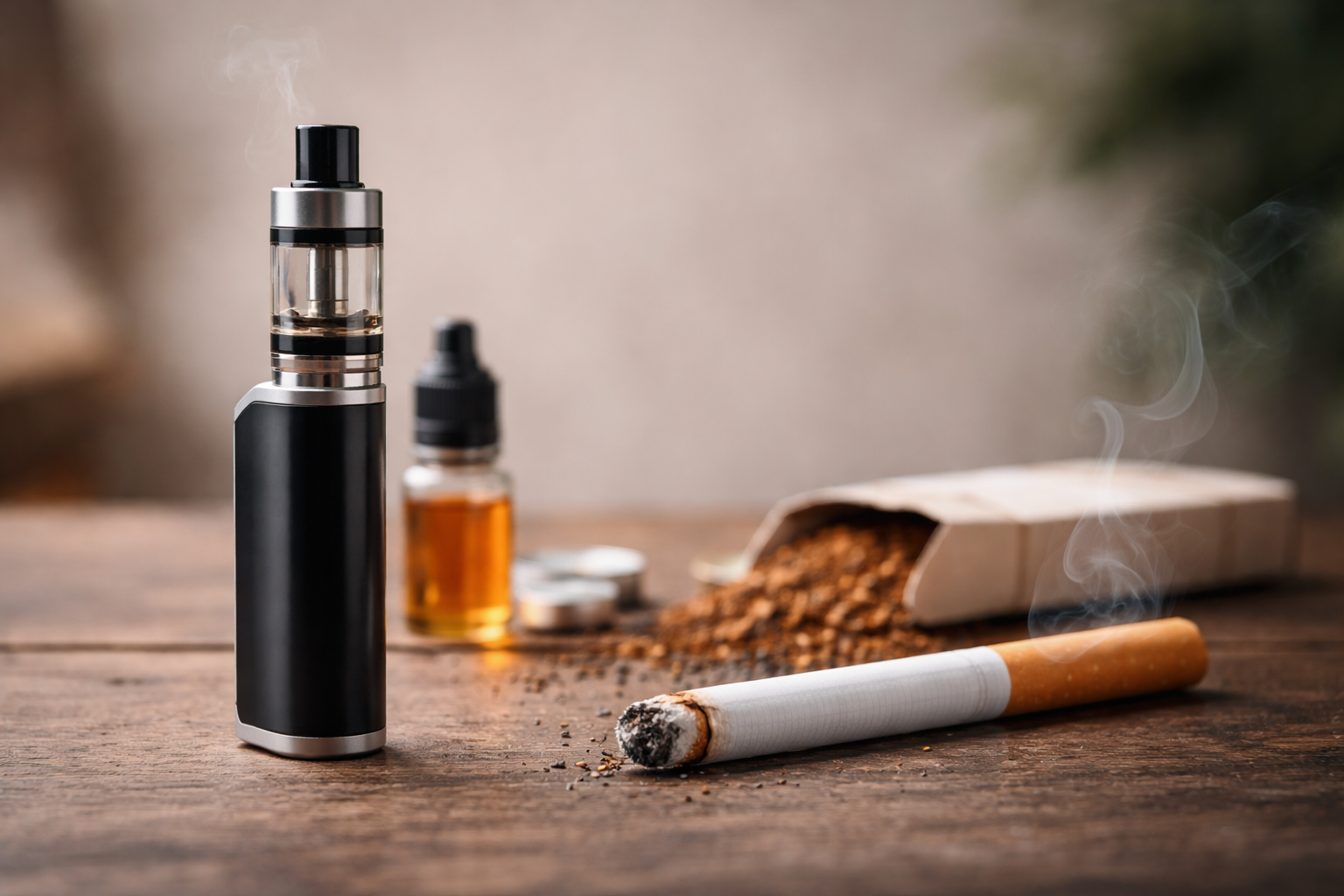
If you smoke, vape, or have switched between the two, you’ve probably wondered which option is actually safer. The conversation around vaping versus smoking is often confusing, emotional, and filled with conflicting headlines. Some sources claim vaping is just as bad as smoking, while others suggest it’s significantly safer. For people trying to protect their health or quit nicotine altogether, that lack of clarity can be frustrating.
This article is designed to give you a calm, unbiased, and medically accurate comparison of vaping and smoking. We’ll explain how each affects the body, what the known and unknown risks are, whether vaping helps people quit smoking, and what lower-risk alternatives exist for people who still rely on nicotine.
Note: No form of nicotine use is completely risk-free. The goal from a health perspective is risk reduction and, when possible, eventual nicotine cessation.
Why This Question Matters
Smoking remains one of the leading causes of preventable illness and death in Canada. Vaping emerged as an alternative for smokers, but its rapid adoption outpaced long-term research, leaving many people unsure what to believe.
Understanding the difference between vaping and smoking matters because it directly affects decisions about quitting, switching products, and managing long-term health risks.

What Happens When You Smoke Cigarettes
Cigarette smoke is produced by burning tobacco. This combustion process releases thousands of chemicals, including dozens known to cause cancer and cardiovascular disease.
Smoking affects nearly every organ system. Long-term risks include:
- Lung cancer and other cancers
- Chronic obstructive pulmonary disease (COPD)
- Heart disease and stroke
- Reduced circulation
- Weakened immune function
Nicotine drives addiction, but it is the smoke itself that causes most of the harm.

What Happens When You Vape
Vaping involves heating a liquid that usually contains nicotine, flavourings, and solvents such as propylene glycol or vegetable glycerin. Unlike smoking, vaping does not involve combustion.
Because there is no burning tobacco, vaping generally exposes users to fewer toxic chemicals than cigarette smoke. However, fewer does not mean zero.
Known and potential vaping risks include:
- Lung irritation and inflammation
- Cardiovascular effects related to nicotine
- Exposure to chemicals created during heating
- Unknown long-term effects due to limited data
Vaping is not harmless, but it differs significantly from smoking in how harm occurs.
Is Vaping Worse Than Smoking?
Based on current scientific evidence, vaping is not worse than smoking in terms of overall toxic exposure. For adult smokers who switch completely from cigarettes to vaping, exposure to many harmful chemicals is reduced.
However, this does not mean vaping is safe or recommended for non-smokers.
- Smoking is the most harmful form of nicotine use
- Vaping likely carries fewer risks than smoking, but still carries risks
- Long-term vaping data is still evolving
- Dual use (both smoking and vaping) reduces potential benefit
From a public health perspective, vaping may play a role in harm reduction for smokers, but it is not risk-free.
Vaping vs Smoking: A Side-by-Side Comparison
- Smoking: Involves combustion; produces thousands of toxic chemicals; strongly linked to cancer and heart disease; well-documented long-term harms.
- Vaping: No combustion; fewer toxic byproducts than smoke; short- to medium-term risks known; long-term effects still being studied.
The absence of combustion is a major reason vaping is considered less harmful than smoking, but uncertainty remains about long-term exposure.
Long-Term Effects of Vaping: What We Know and What We Don’t
Because vaping products are relatively new, long-term data spanning decades does not yet exist. That uncertainty is important to acknowledge.
What we do know:
- Vaping is associated with respiratory irritation
- Nicotine exposure affects heart rate and blood pressure
- Some chemicals in vapour may affect lung cells
What we don’t fully know:
- Lifetime cancer risk from vaping
- Long-term cardiovascular outcomes
- Effects of prolonged daily use over decades
This uncertainty is why vaping is not considered a “safe” alternative, only a potentially lower-risk one for smokers.
Does Vaping Help People Quit Smoking?
For some people, yes. For others, it doesn’t.
- Replacing the hand-to-mouth ritual
- Delivering nicotine without smoke
- Reducing withdrawal symptoms
However, many people end up using both cigarettes and vaping devices. This dual use limits health benefits and maintains nicotine dependence. Quitting smoking successfully often requires addressing both the nicotine addiction and the behavioural habit of smoking.
Nicotine Itself: Understanding the Risk
Nicotine is addictive, but it is not the primary cause of smoking-related cancer or lung disease. That harm comes from smoke inhalation.
- Increase heart rate and blood pressure
- Reinforce dependence
- Affect brain chemistry
Reducing exposure to smoke while managing nicotine cravings is the principle behind nicotine replacement and smoke-free alternatives.
Alternatives to Smoking and Vaping
For people who want to reduce harm or quit smoking without inhaling anything into their lungs, smoke-free nicotine options can be helpful.
- Nicotine gum or lozenges
- Nicotine patches
- Nicotine pouches
Products like ZONNIC Nicotine Pouches deliver nicotine orally without smoke, vapour, or combustion. This eliminates lung exposure entirely and allows for more controlled nicotine reduction over time.
Many people use nicotine pouches as a transition tool while working toward lower nicotine use or complete cessation.
Is Switching to Nicotine Pouches Better Than Vaping?
For lung health, yes.
- Do not involve inhalation
- Avoid exposure to heated chemicals
- Allow controlled nicotine dosing
- Can be tapered gradually
While nicotine itself still carries some cardiovascular considerations, eliminating smoke and vapour reduces respiratory risk significantly.

What Health Professionals Generally Recommend
- Smoking cigarettes (highest risk)
- Vaping nicotine products
- Smoke-free nicotine alternatives (lowest risk among nicotine options)
- No nicotine use
The safest option is always complete cessation. When that isn’t immediately possible, reducing exposure to smoke and vapour is a meaningful step.
Common Myths About Vaping vs Smoking
“Vaping is just as bad as smoking.”
Current evidence does not support this claim, though vaping is not harmless.
“If vaping is safer, it’s safe.”
Lower risk does not mean no risk.
“Switching to vaping automatically means quitting.”
Many people continue using nicotine long-term unless they have a structured plan.
How to Decide What’s Right for You
- Are you trying to quit nicotine completely or reduce harm?
- Are you using one product or multiple?
- Do cravings drive your use or habit and routine?
A healthcare professional or pharmacist can help you weigh options based on your health history and goals.
myRocky provides digital support and education for smoking cessation, including guidance on smoke-free nicotine alternatives.
Frequently Asked Questions
Is vaping safer than smoking cigarettes?
It likely exposes users to fewer harmful chemicals, but it is not risk-free.
Should smokers switch to vaping?
Switching completely may reduce harm, but smoke-free nicotine options may reduce lung exposure further.
Is vaping recommended for non-smokers?
No. Vaping is not recommended for people who do not already use nicotine.
Are nicotine pouches safer than vaping?
They avoid inhalation and may carry lower respiratory risk.
A Final Word from myRocky
Smoking remains the most harmful form of nicotine use. Vaping may reduce some risks for smokers, but it is not harmless, and long-term effects are still being studied. For people looking to reduce harm or quit altogether, smoke-free nicotine alternatives such as pouches can offer another option without lung exposure.
Clear information, realistic expectations, and the right support make healthier choices easier. Wherever you are in your journey, reducing exposure to smoke is a meaningful step toward better health.
References
- Health Canada. “Vaping and Tobacco Products.”
- Johns Hopkins Medicine. “5 Truths You Need to Know About Vaping.”
- Canadian Cancer Society. “Smoking, Vaping, and Health Risks.”
- Public Health Agency of Canada. “Nicotine and Tobacco Harm Reduction.”
Disclaimer: This article is intended for informational purposes only and is not a substitute for professional medical advice, diagnosis, or treatment. Always consult your healthcare provider with any questions about a medical condition or treatment.
Editorial Standards: At Rocky Health, we’ve made it our mission to support men and women with trustworthy, easy-to-understand medical and health information online. Read more about our editorial standards here.

